01
Context
NeuroSteady is an academic group project on the cognitive and physiological effects of infinite short-form content scrolling. The goal was to design an experimental protocol and a closed-loop system able to simultaneously measure physiological state, browsing behavior, and cognitive performance, then introduce adaptive friction when signs of overload appear.
- Literature review on the effects of short-form content and infinite scrolling
- Design of an experimental protocol
- Physiological acquisition
- Behavioral tracking of scrolling
- N-Back cognitive test
- Adaptive interface modulation mechanism

02
Problem addressed
Short-video platforms remove most of the natural stopping points of interaction. The project asks a simple question: can an overload state or an automatic-scrolling pattern be detected in real time, and can friction adapted to the user’s physiological state then be reintroduced? The hypothesis under study is that unrestricted flow favors automatic consumption and attentional overload, whereas adaptive interruptions could help restore more deliberate control over the interaction.
03
System architecture
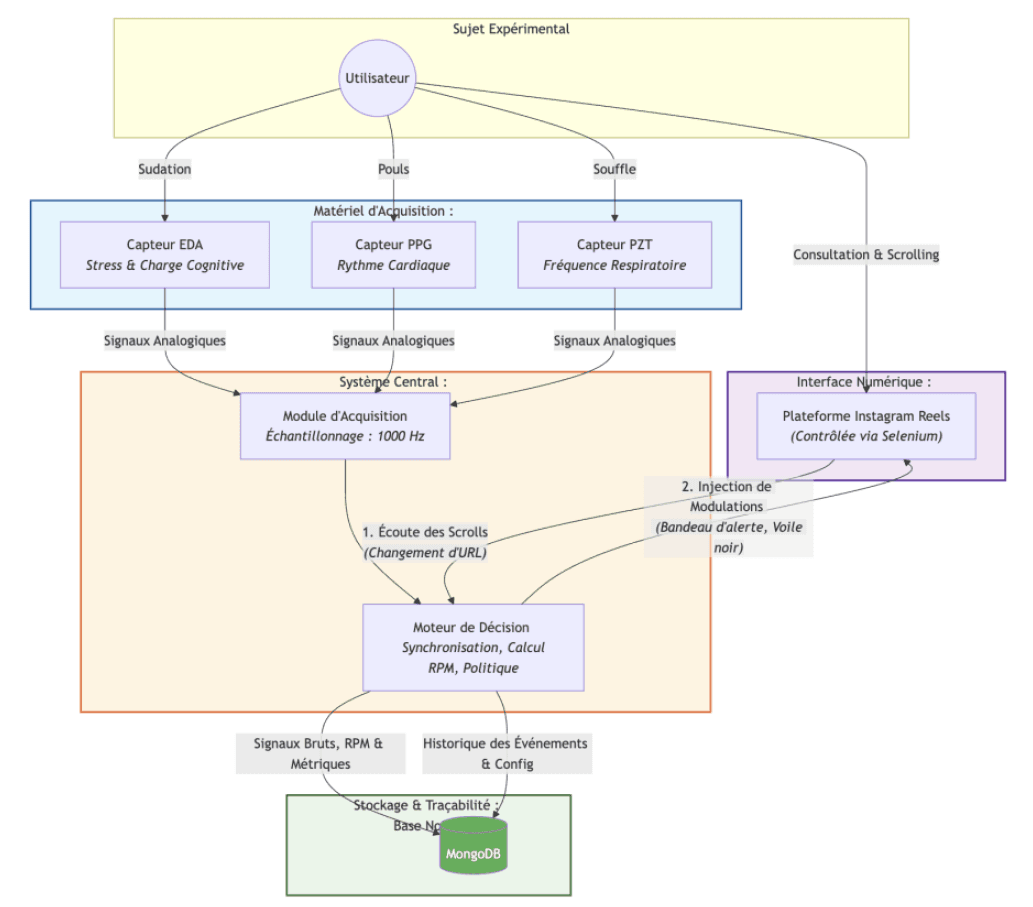
NeuroSteady is designed as a closed-loop experimental system linking several sources of information: electrodermal activity (EDA), photoplethysmography (PPG), respiration (PZT), browsing behavior, and consumption speed expressed in Reels Per Minute (RPM). Physiological signals are acquired via a BITalino device and then processed to extract useful indicators; browsing behavior is tracked through a browser controller to detect content changes and compute the scrolling rate. Events, signals, and metrics are synchronized and stored to allow later analysis of the protocol.
- Physiological acquisition — BITalino (EDA, PPG, PZT)
- Behavioral tracking — browser controller, content detection, RPM computation
- Synchronization and storage of signals, events, and metrics
04
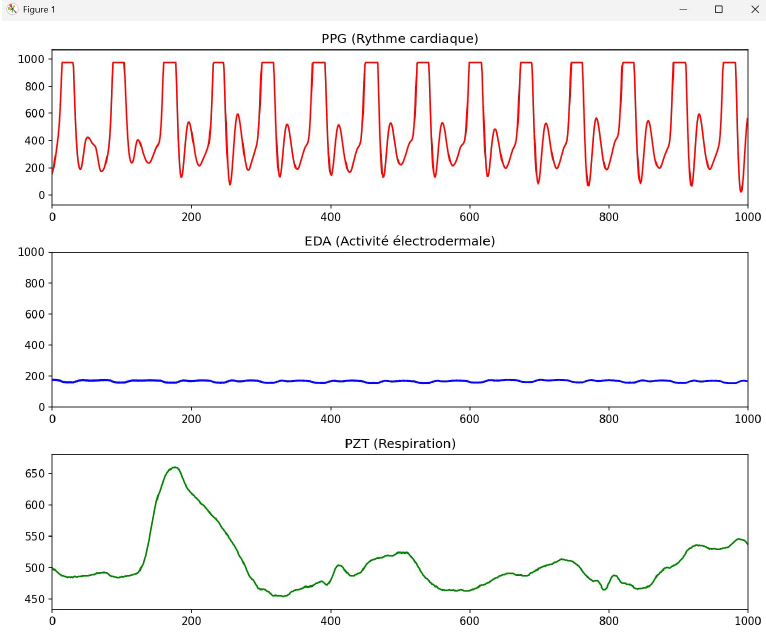
Instrumentation and biosignals
Physiological indicators combine electrodermal activity, photoplethysmography, and respiration, acquired continuously during scrolling exposure. These signals are used to estimate an arousal state, which the decision engine then uses to trigger, or not, adaptive friction.
05
N-Back task and experimental protocol
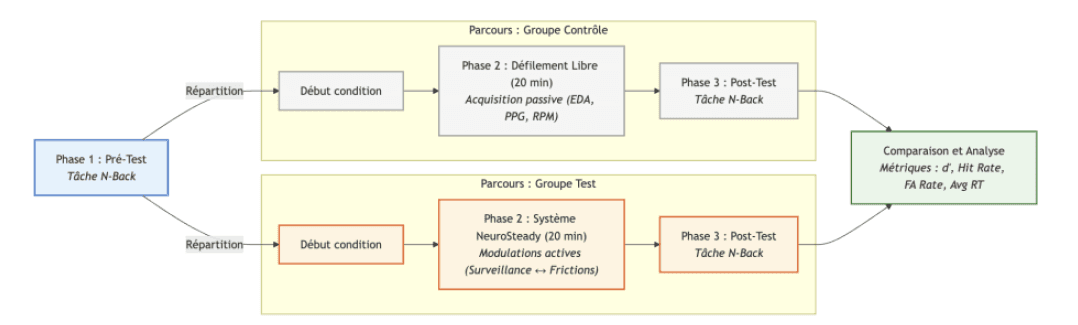
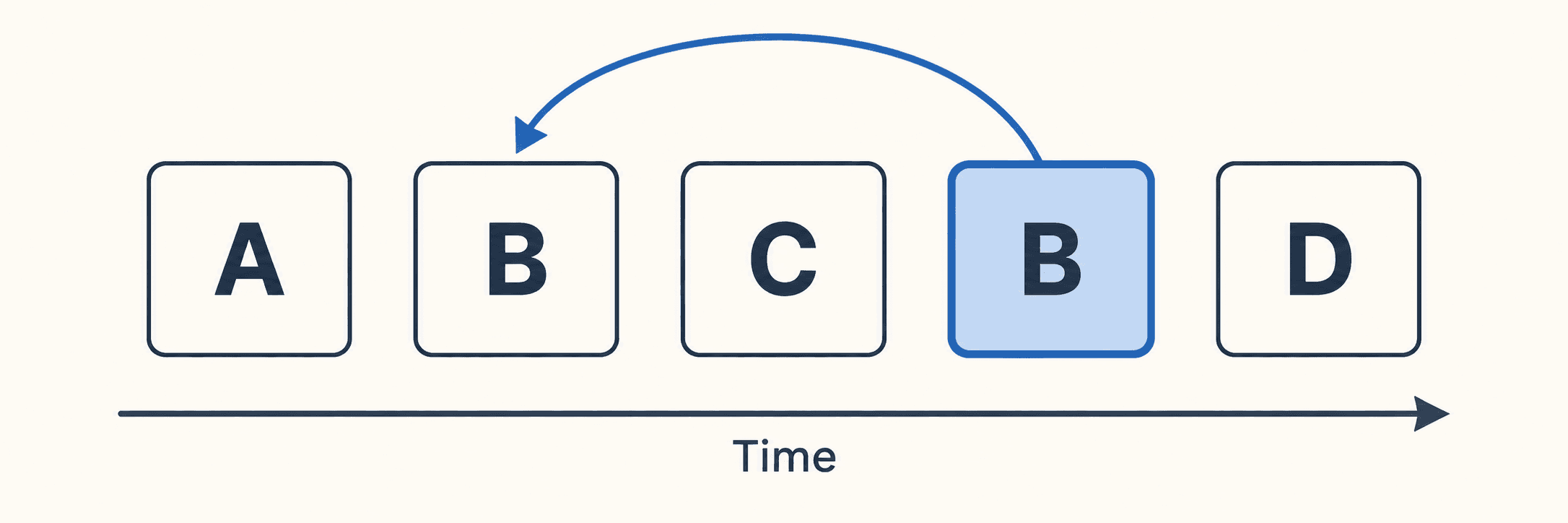
The protocol is organized into three main steps: N-Back PRE (baseline measurement of cognitive performance), a scrolling phase in free or NeuroSteady-modulated exposure, then N-Back POST (measurement of the immediate impact after exposure). The N-Back test serves as a working-memory and executive-control task; the indicators studied include success rate, sensitivity index, false alarms, and reaction time. The protocol includes a comparison between a control group and a group exposed to the adaptive modulations.
- N-Back PRE — baseline measurement
- Scrolling phase — free or modulated
- N-Back POST — measurement of immediate impact
06
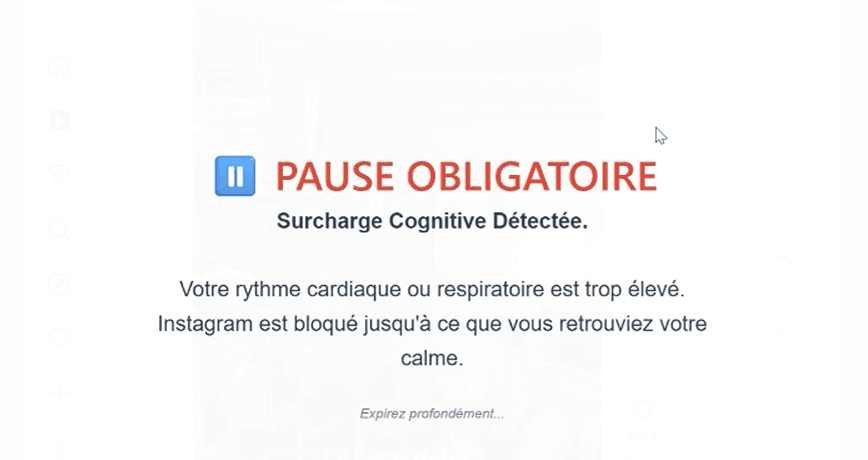
Interface modulation and mandatory pause
In the NeuroSteady condition, the system can inject friction when several indicators cross certain thresholds: behavioral friction requiring a deliberate action before continuing, or a visual pause with temporary interface lockout. Triggering combines physiological measurements with browsing behavior. Unlocking is not purely time-based: the system waits for a sufficient return toward the baseline physiological state before resuming the interaction.
- Behavioral friction — deliberate action required before continuing
- Visual pause — temporary interface lockout
- Unlocking conditioned on returning toward the baseline physiological state, not purely time-based
07
End-to-end chain
NeuroSteady links physiological acquisition (BITalino, EDA, PPG, PZT, BioSPPy), behavioral scrolling tracking (Python, Selenium), storage (MongoDB), the N-Back cognitive protocol, and the adaptive interface-modulation mechanism into a single experimental chain. The heart of the project is less about algorithmic performance than about the relationship between interface, behavior, and cognitive load: rethinking a digital interaction that doesn’t only aim to maximize fluidity, but can also deliberately reintroduce stopping points once usage becomes automatic.
08
Limits and current status
The project should be presented as an experimental protocol and a system prototype, not as clinical validation. The results presented in the report are mainly expected outcomes and evaluation perspectives.
- Sensor sensitivity to motion artifacts
- EDA sensitive to arousal intensity but not to its valence
- Hawthorne effect linked to the experimental setting and wearing the sensors
- Need for a sufficiently large sample to validate the hypotheses
- Final results mainly expected rather than experimentally confirmed